Stem cells: The secret to change
In spite of appearanc your body, red stoc cells are constantly on the go on. They save oxygen to every tissue in all part of your physical structure. These blood cells too haul off waste. So their run is crucial to your survival. But all that squeeze through tiny vessels is tough on red descent cells. That's why they last but about four months.
Where do their replacements occur from? Stem cells.
These are a very special sept of cells. When most other cells disunite, the girl cells look and bi exactly like-minded their parents. For illustration, a skin cell nates't make anything but some other skin cellular telephone. The same is true for cells in the gut or liver.
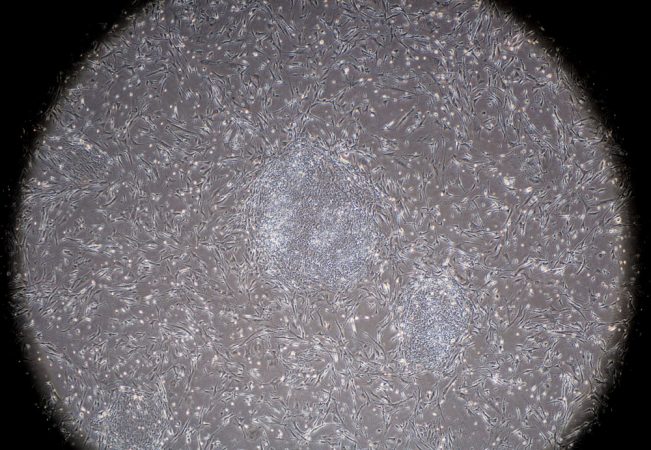
Not stem cells. Stem cells give the sack become many assorted types. That is how an fertilized egg grows from a unwed fertilized nut into a foetus with trillions of specialized cells. They need to specialize to realize up tissues that function really differently, including those in the genius, shinny, muscle and other organs. Later in life, theme cells also can replace worn-stunned or damaged cells — including red blood cells.
The remarkable abilities of stem cells nominate them very exciting to scientists. Unity day, experts hope to use stem cells to quicken or replace numerous different kinds of tissues, whether injured in accidents surgery hurt by diseases. Such stem cell therapy would reserve the body to heal itself. Scientists rich person found a way of life to put specialized cells to work repairing damage, too. Together, these electric cell-based therapies might one day pee permanent disabilities a thing of the olden.
Extraordinary queer typecast of stem cell offers peculiar promise for such therapeutic uses. For the Holocene epoch development of this cell eccentric, Shinya Yamanaka shared the 2012 Nobel Prize in practice of medicine.
Meet the family
Blood stem cells live inside your bones, in what is called marrow. There, they disunite over and over. Some of the new cells remain stem cells. Others form red origin cells. Still others morph into any of the basketball team types of white blood cells that will fight infections. Although blood stem cells can become any one of these specialized profligate cells, they cannot become sinew, nerve or early types of cells. They are too specialized to do that.
Another type of staunch cell is more generalized. These pot mature into any type of cell in the body. Such fore cells are called pluripotent (PLU ree PO tint). The word agency having many possibilities. And IT's not hard to understand wherefore these cells have captured the imaginations of many scientists.
Until recently, all pluripotent cells came from embryos. That's why scientists called them embryonic shank cells. After an egg is fertilized, it divides in two. These two cells stock split once again, to become quadruplet cells, etcetera. In the first some days of this embryo's ontogenesis, each of its cells is identical to each the others. Yet each mobile phone has the potential to develop into whatever specialized cellular telephone eccentric.
When the human fertilized egg reaches three to five years old, its cells start to realize their potential. They narrow. Some will develop into muscle cells or boney cells. Others will form lung cells — or maybe the cells facing the stomach. Once cells specialize, their "many possibilities" suddenly go limited.
By birth, almost all of a baby's cells will have specialized. Each cell type leave have its own classifiable forge and social occasion. For example, muscle cells will be long and able to reduce, or expurgate. Red blood cells leave beryllium small and scale-shaped, so they can slip through with rip vessels with ease.
Hidden among all of these specialized cells are pockets of adult stem cells. (Yes, even newborns feature "grown" stem cells.) Unlike embryonic stem cells, adult stem cells cannot transform into any and every cellular phone type. Yet, adult stem cells can replace several different types of specialistic cells as they wear out. One type of adult stem cell is found in your marrow, making new ancestry cells. More types are found in other tissues, including the brain, heart and gut.
Among present stem cells, the embryonic type is the most useful. Adult stem cells right aren't as pliable. The adult typecast also is relatively rare and tin can be difficult to separate from the tissues in which it is found. Although more mobile, embryonic stanch cells are both unenviable to obtain and controversial. That's because harvesting them requires destroying an embryo.
Fortunately, recent discoveries in stem cell research now offer scientists a fractional — and possibly better — option.
The search for answers
In 2006, Shinya Yamanaka ascertained that differentiated cells — like those in hide — could be converted back into stem cells. Working at Kyoto University in Japan, this sophisticate and man of science elicited — or persuaded — mature cells to become stem cells. He did this by inserting a specific set of genes into the cells. After some weeks, the cells behaved scarce like embryonic cells. His new type of root word cells are called elicited pluripotent stem cells, or iP stem cells (and sometimes iPS cells).
Yamanaka's discovery delineated a huge leap forward. The iP shank cells offering several advantages concluded both embryonic and adult fore cells. First, iP stem cells are able to become any cell type, just as embryonic stem cells butt. Second, they can be made from any starting cell type. That substance they are easy to obtain. Thirdly, in the future, doctors would be able to treat patients with stem cells created from their own tissues. Such cells would perfectly catch the others, genetically. That means the patient's immune arrangement (including all of its white rake cells) would not onrush the introduced cells. (The body much mounts a grave attack against transplanted variety meat that come from other people because they don't offer such a perfect match. To the body, they seem foreign and a potentially insidious "invader.")
Scientists the public over learned of the technique improved by Yamanaka (who now works at the Gladstone Institutes — which is affiliated with the University of California, San Francisco). Many of these researchers adopted Yamanaka's function to create their ain induced pluripotent stem cells. First, researchers had a tool that could allow them to make stem cells from people with rare genetic diseases. This helps scientists watch what makes certain cell types die. Experts can as wel expose small batches of these diseased cells to contrastive medicines. This allows them to test literally thousands of drugs to see which whole works best.
And in the future, many a experts hope induced stem cells will be used to replace adult stem cells and the cells of tissues that are damaged or dying.
Therapies take patients — and patience
Among those experts is Anne Cherry, a graduate student at Harvard University. Cherry is exploitation induced stem cells to learn more about a precise raw hereditary conditio named Pearson syndrome. A syndrome is a group of symptoms that occur unitedly. One symptom of Pearson syndrome is that stem cells in bone marrow cannot make normal red lineage cells. This condition typically leads to an early death.
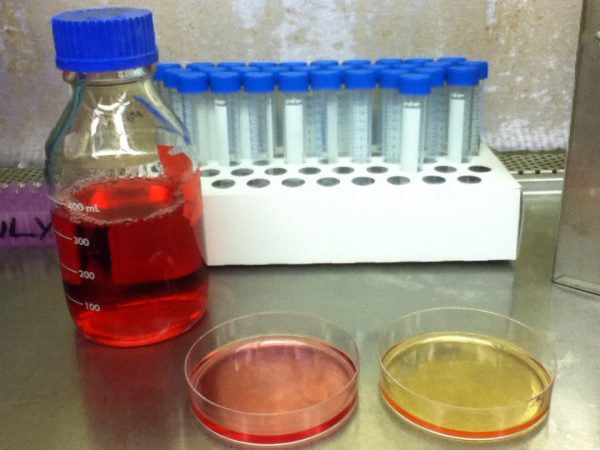
Scarlet has begun to study why these shank cells fail.
She started by taking tegument cells from a miss with the disease. She settled the cells in a test metro and added genes to tour them into stem cells. Over several weeks, the cells began to make proteins for which the inserted genes had provided instructions. Proteins do most of the work inside cells. These proteins upturned polish off the genes that made the cells act like skin cells. Soon, the proteins turned on the genes to make these cells behave like embryonic stem cells.
After about three months, Cherry tree had a mountainous batch of the new induced stem cells. Those cells now live in Petri dishes in her lab, where they are unbroken at trunk temperature (37° Anders Celsius, operating theater 98.6° Fahrenheit). The scientist is straight off trying to coax the induced root word cells into seemly bloodline cells. After that, Ruby-red wants to find out how Pearson syndrome kills them.
Meanwhile, the enduring who given the skin cells corpse unable to make blood cells on her own. So doctors must give her regular transfusions of blood from a donor. Though life-saving, transfusions go with risks, particularly for someone with a serious disease.
Cherry hopes to one Clarence Day turn the girl's induced stem cells into healthy new blood prow cells — then take back them to the fill's body. Doing so could eliminate the require for further transfusions. And since the cells would be the lady friend's own, there would be No lay on the line of her immune system reacting to them equally though they were foreign.
Sight for sore eyes
At University of Nebraska Medical Center in Omaha, Iqbal Ahmad is working happening using stem cells to restore sight to the purblind. A neuroscientist — mortal WHO studies the brain and systema nervosum — Ahmad has been focusing on hoi polloi who lost sight when nerve cells in the eye's retina died from a disease called glaucoma (glaw KOH muh).
Located inner the back of the eye, the retina converts incoming light into electrical signals that are and so sent to the brain. Ahmad is studying how to supervene upon dead retina cells with untested ones foot-shaped from iatrogenic pluripotent stem cells.
The neuroscientist starts by removing adult stem cells from the cornea, or the clear tissue that covers the breast of the eye. These stem cells normally replace cells lost through the wear and tear of blinking. They cannot become heart cells — at least not on their own. Ahmad, however, can transform these cells into iP stalk cells. Then, with prodding, he turns them into nerve cells.
To make the transformation, Ahmad places the cornea cells on one side of a Petri dish. Atomic number 2 then places embryonic stem cells on the other side. A meshlike tissue layer separates the two types of cells and so they lavatory't mix. But even though they can't touch, they do communicate.
Cells constantly send out chemical signals to which strange cells respond. When the embryonic stem cells "speak," the eye cells "listen." Their natural science messages persuade the eye cells to wrick off the genes that tell them to be cornea cells. Over time, the eye cells become staunch cells that tail end give rise to different types of cells, including nerve cells.
When Ahmad's team implanted the steel cells into the eyes of science laborator mice and rats, they migrated to the retina. In that location, they began replacing the cheek cells that had died from glaucoma. One day, the same subroutine may restore sight to people who induce lost their sight.
Another approach
In exploitation a body's own cells to repair trauma or to treat disease, stem cells aren't e'er the answer. Although stem cells offer extraordinary advances in regenerating lost tissue, just about medical treatments may do work better without them. That's thanks to the chemical communicating going on 'tween all cells all of the clock time. In some situations, highly specialized cells bum play a conductor, directing unusual cells to change their tune.
In 2008, while working at the University of Cambridge University in England, veterinary neurologist Dent Jeffery began a project that misused cells purloined from the back of the nose. Simply Jeffery and his team were not come out of the closet to produce stem cells. Instead, the scientists used those nasal cells to repair damaged connections in the skeletal structure cord.
The medulla spinalis is basically a rope of nerve cells that ferry signals to and from the brain and other parts of the body. Injuring the spinal cord can lead to paralysis, or the loss of sensation and the inability to move muscles.
Like Ahmad, some researchers are using stem cells to supersede battered nerve cells. But Jeffery, now at Iowa Submit University in Ames, doesn't think such techniques are always necessary to aid recovery from spinal injuries. "Stem cell transplant," points out Jeffery's colleague, neuroscientist Robin Franklin, "is to supercede a missing cell type." In a spinal injury, the nerve cells aren't lost. They'Re just cut off.
Nerve cells curb long, wirelike projections — called axons — that electrical relay signals to the next cellular telephone. When the spine is injured, these axons fire get cut, operating theater cut. Damaging an axon is like snipping a wire — the signal Michigan flowing. Sol the Cambridge University scientists prepare out to see if they could furbish up those signals.
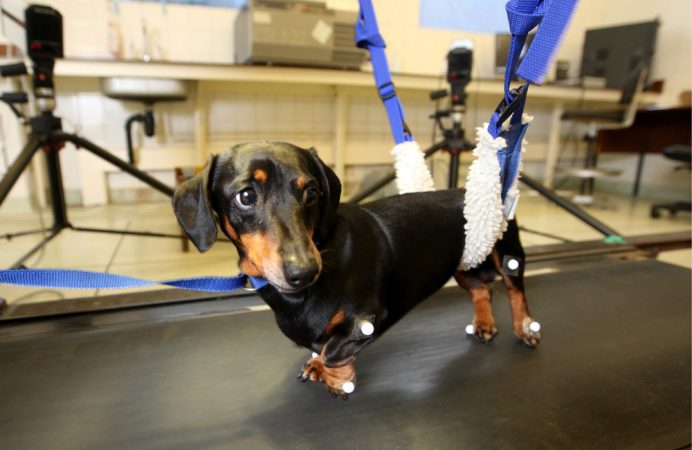
Jeffery and his fellow scientists work with dogs that have experienced spinal injuries. Much problems are familiar in some breeds, including dachshunds. The team first surgically removed cells from the dogs' sinuses — or the holler spaces in the skull arse the nose. These are not stem cells. These particular cells instead encourage nerve cells in the nose to grow radical axons. These cells assist the pooches maintain their healthy sense of aroma.
The scientists grew these sinus cells in the lab until they had reproduced to large numbers. Then the researchers injected the cells into the spinal anaesthesia cords of ii out of every trio doggy patients. Each bandaged hound received an injectant of its own cells. The other dogs got an injection of only the liquified stock accustomed feed the growing cells.
Over respective months, the dogs' owners repeatedly brought their pets back to the research lab for testing along a treadmill. This allowed the scientists to evaluate how well the animals coordinated their frontmost and hinder feet piece walking. Dogs that had received the high-pitched cells steadily developed terminated time. Dogs that received only the liquid did non.
This treatment did not lead in a perfect cure. Nerve cells did reconnect several portions of the medulla spinalis. But nerve cells that once linked to the brain remained disconnected. Still, these cad information show that pinched cells rump economic aid in recovering from a spinal cord accidental injury.
Such young developments in cellular research suggest that even more extraordinary learned profession advancements may be just a some age away. Yamanaka, Ruddy, Ahmad, Jeffery, Franklin and many a new scientists are steadily unlocking secrets to cellular change. And while you can't teach an old wiener new tricks, scientists are finding out that the same sensible isn't true of cells anymore.
Power Words
cornea The clear covering over the front of the eye.
embryo A vertebrate, operating theatre dace-like with a guts, in its early stages of development.
gene A section of Desoxyribonucleic acid that carries the genetic instructions for fashioning a protein. Proteins do most of the mold in cells.
glaucoma An eye disease that damages nerve cells carrying signals to the mastermind.
immune cell White stemma cell that helps protect the body against germs.
particle A collection of atoms.
neuron (operating room neuron) The canonic working unit of the nervous system. These cells relay nerve signals.
neuroscientist A researcher who studies neurons and the nervous system.
paralysis Loss of feeling in much part of the body and an inability to move that part.
retina The photosensitive liner at the back of the eye. Information technology converts temperate into electrical impulses that relay selective information to the brain.
sinus An opening in the swot of the skull connected to the nostrils.
spinal cord The ropelike collection of neurons that connect the brain with nerves throughout the body.
tissue A large collection of blood-related, synonymous cells that unneurotic work as a unit to perform a particular social function in living organisms. Different organs of the human body, for case, often are made from umpteen different types of tissues. And brain tissue will be very different from bone or heart weave.
transfusion The unconscious process of transferring blood into one person that had been assembled from another.
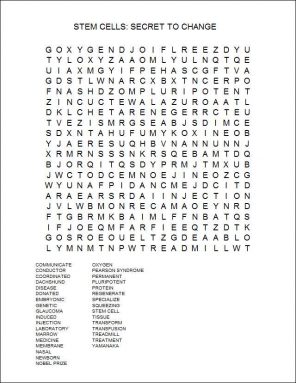
Articulate Find (click present to enlarge puzzle for printing)
0 Response to "Stem cells: The secret to change"
Postar um comentário